
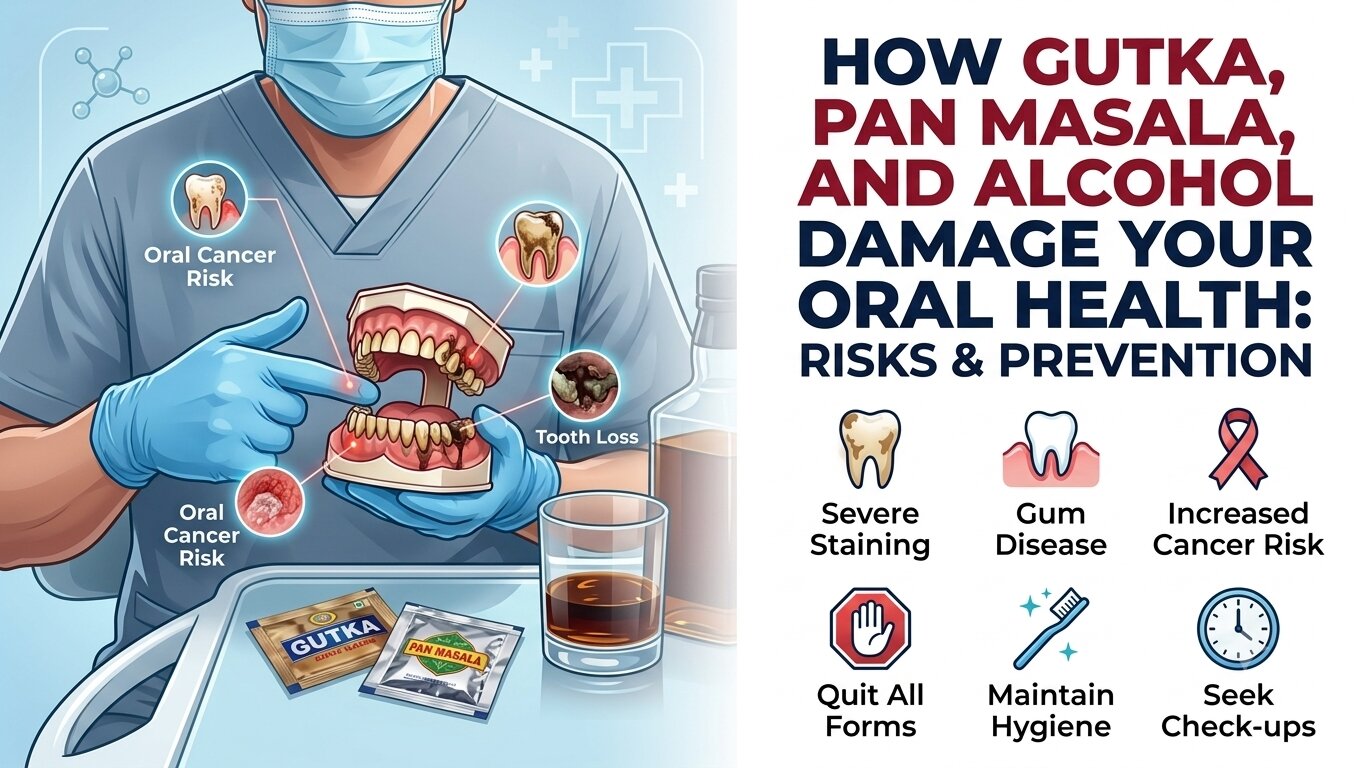
Oral health is a vital part of overall well-being, yet many habits contribute to its deterioration. Among the most harmful substances affecting oral health are gutka, pan masala, and alcohol. Despite being widely consumed, these products cause severe and lasting damage to teeth, gums, and oral tissues. Understanding their negative impact can help individuals make informed choices and adopt preventive measures to maintain a healthy and confident smile.
How Gutka Affects Your Oral Health
Gutka generally contains tobacco, areca nut, slaked lime, catechu, and other ingredients. Because it is held or chewed inside the mouth, the oral tissues can have prolonged exposure to harmful substances.
Regular gutka use can contribute to:
- Gum inflammation and periodontal disease
- Tooth staining and discoloration
- Bad breath
- Tooth sensitivity and wear
- Oral mucosal changes
- Leukoplakia or persistent white patches
- Oral submucous fibrosis (OSMF)
- Increased risk of oral cancer
Smokeless tobacco is associated with oral cancer, gum disease, mucosal lesions, and other oral health problems.
Is Pan Masala Without Tobacco Safe?
A common misconception is that tobacco-free pan masala is harmless.
This is not necessarily true.
Many pan masala products contain areca nut, which is independently associated with oral cancer and potentially malignant oral disorders. IARC identifies areca nut use as a major oral-cancer risk in countries where it is commonly consumed.
Therefore, switching from gutka to tobacco-free pan masala does not eliminate the risk if the product contains areca nut.
How Alcohol Damages Oral Health
Alcohol can affect the mouth in several ways. Frequent or heavy alcohol consumption is an established risk factor for cancers of the oral cavity and other parts of the upper aerodigestive tract.
Alcohol consumption can also contribute to:
- Dry mouth
- Bad breath
- Increased vulnerability of oral tissues
- Greater risk of tooth decay, particularly when combined with poor oral hygiene or sugary mixers
- Increased risk of oral and throat cancers
The risk of oral and related cancers increases with alcohol consumption, and the risk becomes substantially higher when alcohol is combined with tobacco use.
The Damaging Effects of Gutka on Oral Health
Gutka, a blend of tobacco, areca nut, slaked lime, and flavoring agents, is highly addictive and detrimental to oral health. Its harmful effects include:
- Oral Cancer Risk –Gutka contains carcinogenic substances that significantly increase the likelihood of developing oral cancer. Early signs include white or red patches inside the mouth, which can turn malignant if not treated.
- Tooth Decay and Enamel Erosion –The acidic nature of gutka erodes tooth enamel, leading to cavities, sensitivity, and eventual tooth loss.
- Gum Disease –Regular gutka use causes inflammation and infection in the gums, leading to bleeding, recession, and, in severe cases, periodontitis.
- Restricted Mouth Opening (Oral Submucous Fibrosis – OSMF) –Chewing gutka thickens and stiffens the oral tissues, making it difficult to open the mouth and perform daily functions like eating and speaking.
- Persistent Bad Breath (Halitosis) –The combination of tobacco and other chemicals in gutka leads to chronic bad breath, which can be socially distressing.
The Harmful Effects of Pan Masala on Oral Health
Pan masala, often marketed as a mouth freshener, contains harmful ingredients such as areca nut, catechu, and artificial flavoring agents. Its impact on oral health includes:
- Tooth Staining and Discoloration –Pan masala leaves stubborn stains on teeth, turning them yellow or brown over time.
- Increased Risk of Pre-Cancerous Lesions –Continuous use can cause leukoplakia, a condition that increases the risk of oral cancer.
- Gum Deterioration –Areca nut in pan masala weakens the gums, leading to inflammation, bleeding, and eventual gum disease.
- Loss of Taste Sensation – Prolonged consumption dulls the taste buds, reducing the ability to enjoy flavors.
- Dry Mouth –The chemicals in pan masala reduce saliva production, resulting in a dry mouth, bad breath, and a higher risk of cavities.
The Adverse Effects of Alcohol on Oral Health
Alcohol consumption, particularly in excessive amounts, has serious consequences for oral health. The major risks include:
- Dry Mouth and Reduced Saliva Flow –Alcohol dehydrates the mouth, reducing saliva production. Saliva is essential for removing bacteria and neutralising acids. A dry mouth raises the risk of cavities and gum disease.
- Increased Risk of Oral Cancer –Alcohol weakens the mucosal lining of the mouth, making it more susceptible to cancerous changes, especially when combined with tobacco use.
- Tooth Decay and Enamel Erosion –Many alcoholic beverages contain high sugar and acidic content, which erode tooth enamel, leading to decay and sensitivity.
- Gum Disease –Alcohol weakens the immune system, making the gums more vulnerable to bacterial infections, inflammation, and bleeding.
- Oral Infections and Ulcers –Excessive alcohol consumption can lead to frequent oral infections, mouth ulcers, and an increased risk of fungal growth like oral thrush.
Prevention and Oral Care Tips
While avoiding gutka, pan masala, and alcohol is the best way to protect oral health, individuals who have already developed these habits can take the following preventive measures:
- Quit Harmful Habits –Seek professional help, counseling, or support groups to quit consuming gutka, pan masala, and alcohol.
- Maintain Good Oral Hygiene –Brush twice daily using fluoride toothpaste, floss regularly, and rinse with an antibacterial mouthwash.
- Stay Hydrated –Drinking plenty of water helps flush out toxins and keeps the mouth hydrated.
- Eat a Balanced Diet –Include calcium-rich foods such as dairy products, leafy greens, and nuts to strengthen teeth and gums.
- Schedule Regular Dental Check-ups –Visiting a dentist every six months ensures early detection of oral health issues and timely treatment.
- Use Sugar-Free Chewing Gum –If quitting immediately is difficult, switching to sugar-free gum can help stimulate saliva production and reduce cravings.
Conclusion
The harmful effects of gutka, pan masala, and alcohol on oral health are severe and far-reaching. From minor issues like bad breath and staining to life-threatening conditions such as oral cancer and gum disease, these substances pose significant risks. Taking proactive steps toward quitting these habits and adopting good oral hygiene can lead to a healthier future. At Vivan Dental, we emphasize preventive care and expert guidance to help individuals achieve and maintain a healthy smile. Prioritizing oral health today ensures a confident and disease-free tomorrow.