
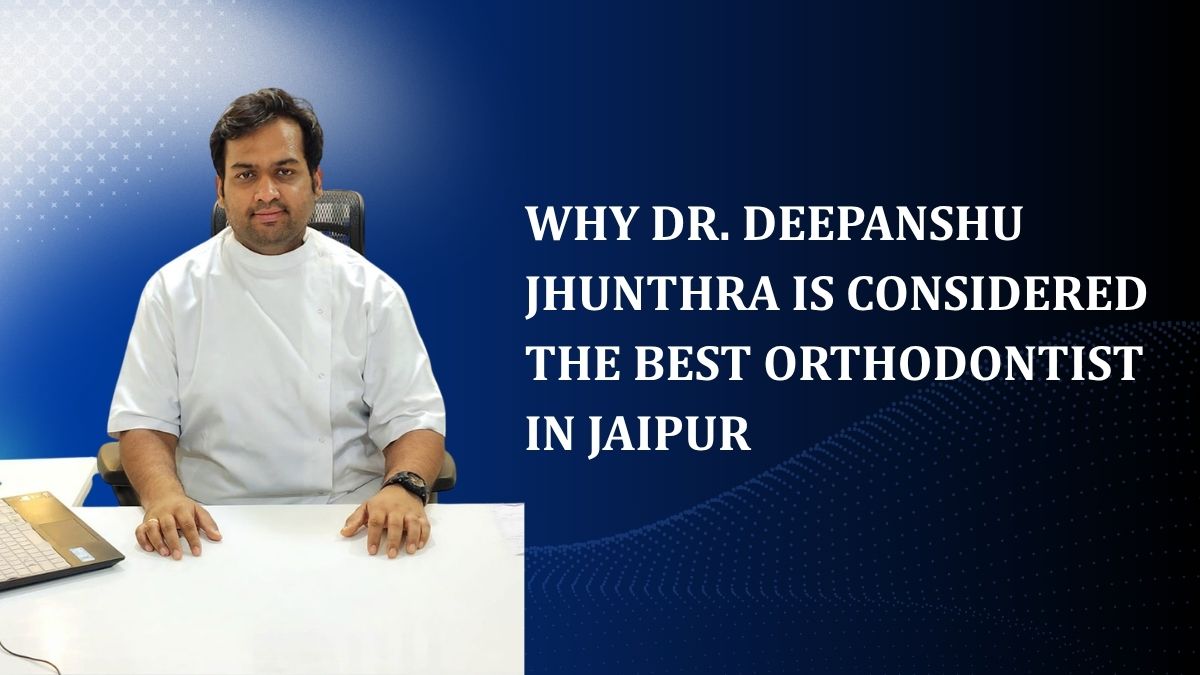
Choosing an orthodontist is an important decision, especially when treatment may continue for several months or longer. If you are considering braces or clear aligners, the right starting point is not simply searching for the “best orthodontist in Jaipur.” It is more useful to look at the orthodontist’s specialist qualification, professional registration, approach to diagnosis, available treatment options, and follow-up care.
Orthodontic treatment is different for every patient. Crowding, gaps between teeth, bite problems and other alignment concerns can require different treatment approaches. A clinical examination is therefore necessary before deciding whether braces, clear aligners, or another option is suitable.
Here are some practical factors you can consider while choosing an orthodontist in Jaipur.
1. Check the Dentist’s Orthodontic Qualification
Orthodontics is a specialised branch of dentistry concerned with the position of teeth, dental alignment, and bite relationships.
When choosing an orthodontist, check whether the dentist has completed postgraduate specialist training in Orthodontics. Qualifications should be clearly available rather than relying only on promotional terms such as “expert” or “best.”
At Vivan Dental, Dr. Deepanshu Jhunthra completed his MDS in Orthodontics from MGDC Hospital, Jaipur, in 2019 after completing his BDS.
His clinical work includes orthodontic assessment, braces, clear aligners and treatment planning for different alignment and bite concerns.
2. Verify Professional Registration and Memberships
Professional registration is another useful factor to check before starting dental treatment.
Patients can ask the clinic for the dentist’s registration details and, where applicable, verify them with the relevant professional authority.
Dr. Deepanshu Jhunthra is registered with the Rajasthan State Dental Council under Registration No. A-5262.
He is also a professional member of the Indian Orthodontic Society (IOS).
These certificates helps patients understand the professional background of the dentist providing their orthodontic care.
3. Orthodontic Treatment Should Begin With an Assessment
Braces or aligners should not be selected simply because one option is more popular or less visible.
An orthodontic consultation may involve assessment of:
- Tooth position and alignment
- Crowding or spacing
- Upper and lower bite relationship
- Oral and dental health
- Previous orthodontic treatment
- Suitability for braces or clear aligners
- Retention requirements after treatment
Additional diagnostic records may be recommended depending on the individual case.
The purpose of the assessment is to understand the orthodontic problem before deciding on an appropriate treatment plan.
4. Ask About the Available Treatment Options
Modern orthodontics includes several treatment approaches. However, no single appliance is appropriate for every patient.
Depending on the orthodontic condition, available options may include:
Metal Braces
Metal braces use brackets and wires to gradually move teeth. They can be considered for a wide range of alignment and bite problems.
Ceramic Braces
Ceramic braces work on principles similar to conventional braces but use less noticeable brackets. They may be considered by patients concerned about the appearance of braces during treatment.
Clear Aligners
Clear aligners are removable trays designed to move teeth progressively. They may provide a less visible orthodontic option for suitable cases.
However, clear aligners are not automatically the better choice for every patient. Suitability depends on the required tooth movement, bite, case complexity and patient compliance.
An orthodontist should explain why a particular treatment has been recommended rather than recommending the same appliance to every patient.
5. Understand the Treatment Plan Before Starting
Before beginning orthodontic treatment, patients should have an opportunity to understand what the treatment involves.
Useful questions to ask include:
- What orthodontic problem do I have?
- Why is this treatment being recommended?
- Are there alternative treatment options?
- Approximately how long could treatment take?
- How frequently will follow-up appointments be required?
- Will I need retainers after treatment?
- What are the expected limitations or risks?
- What factors could affect the treatment duration?
Orthodontic treatment duration varies from person to person. The type and complexity of the problem, required tooth movement, appliance, and patient compliance can all influence treatment time.
Therefore, a fixed treatment duration should not be assumed without an individual assessment.
6. Look for Clear Communication
Good orthodontic care also involves communication between the patient and orthodontist.
You should be able to understand:
- What the examination has identified
- Why treatment may or may not be required
- Available treatment choices
- Expected follow-up
- Oral hygiene requirements during treatment
- The role of retainers after active treatment
Patients should also have an opportunity to ask questions before making a treatment decision.
At Vivan Dental, orthodontic treatment planning is based on the patient’s dental findings and individual treatment requirements rather than using the same treatment plan for every patient.
7. Ask About Follow-Up and Retention
Orthodontic care does not end when braces are removed or the final aligner has been completed.
Regular appointments during active treatment allow the orthodontist to monitor tooth movement and make adjustments when required.
After active orthodontic treatment, retainers are commonly recommended to help maintain the corrected tooth positions.
Before starting treatment, ask about both the active treatment phase and the expected retention plan.
8. Consider Clinic Location and Accessibility
Orthodontic treatment commonly requires multiple visits, so clinic accessibility can be practically important.
Vivan Dental is located at: 10, Queens Road, Rathore Nagar, Vaishali Nagar, Jaipur – 302021
Patients looking for an orthodontist in Vaishali Nagar or nearby areas can consider travel time and appointment availability because regular follow-up may form an important part of orthodontic treatment.
Meet Dr. Deepanshu Jhunthra
Dr. Deepanshu Jhunthra
BDS, MDS – Orthodontics
MDS Orthodontics – MGDC Hospital, Jaipur, 2019
Rajasthan State Dental Council Registration No. A-5262
Member – Indian Orthodontic Society
Dr. Deepanshu Jhunthra provides orthodontic consultation and treatment at Vivan Dental in Vaishali Nagar, Jaipur.
His clinical work includes assessment and treatment planning for concerns such as tooth crowding, spacing, alignment, and bite relationships. Treatment options may include conventional braces, ceramic braces, and clear aligners depending on the individual orthodontic requirements.
How Do You Decide Which Orthodontist Is Right for You?
There is no independent clinical ranking that identifies one orthodontist as the “best” choice for every patient.
Instead of relying only on advertising claims, consider verifiable factors such as:
- Specialist qualification in Orthodontics
- Professional dental registration
- Relevant professional memberships
- Approach to diagnosis and treatment planning
- Clear explanation of available treatment options
- Follow-up and retention planning
- Communication with patients
The appropriate orthodontist and treatment approach ultimately depend on your individual dental condition and treatment requirements.
Frequently Asked Questions
Who should I consult for braces in Jaipur?
A dentist with postgraduate specialist training in Orthodontics is specifically trained in the assessment and management of tooth alignment and bite concerns. Check the orthodontist’s qualifications and registration before beginning treatment.
How do I find the best orthodontist in Jaipur?
There is no independent ranking that establishes one orthodontist as the best for every patient. You can compare specialist qualifications, professional registration, clinical assessment, communication, available treatment options and follow-up care by our team members before making a decision.
What does an orthodontist treat?
Orthodontists assess and manage concerns including crooked teeth, crowding, unwanted spacing and various bite relationships. The treatment required depends on the individual diagnosis.
Are clear aligners better than braces?
Neither option is universally better. Clear aligners may be suitable for some orthodontic problems, while conventional braces may be recommended in other situations. An orthodontic assessment helps determine which options are appropriate.
Can adults get orthodontic treatment?
Adults can be considered for orthodontic treatment. Suitability depends on factors including oral health, tooth and gum condition and the orthodontic correction required.
How long does orthodontic treatment take?
Treatment duration varies according to the orthodontic problem, complexity of tooth movement, appliance used and patient compliance. An approximate timeframe can be discussed after an orthodontic assessment.
Do I need retainers after braces or aligners?
Retainers are commonly recommended after active orthodontic treatment because teeth can change position over time. The type and duration of retention should be discussed with your orthodontist.
Final Thoughts
Choosing an orthodontist should be based on more than promotional claims.
Check the orthodontist’s specialist qualifications and professional registration, understand how your condition will be assessed, ask about available treatment options and make sure follow-up and retention are clearly explained.
If you have concerns about crooked teeth, crowding, spacing or your bite, an orthodontic consultation can help determine whether treatment is required and which options may be suitable for your individual needs.
Written & Clinically Reviewed By
Dr. Deepanshu Jhunthra
BDS, MDS – Orthodontics
Vivan Dental, Vaishali Nagar, Jaipur
Rajasthan State Dental Council Registration No. A-5262
Last Reviewed: September 2026
Medical Disclaimer
This article provides general educational information about choosing an orthodontist and orthodontic treatment. It is not a substitute for a clinical examination, diagnosis or personalised dental advice. Treatment suitability, duration, risks and outcomes vary according to the individual patient and orthodontic condition.